Neighborhood · Staten Island
St. George
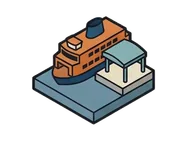
Home of the 1s. Every house number on Staten Island counts up from this dock. Here's the island, from its first block.
Visit St. George 3Dstaten.nycTHE FIELD GUIDEFind a page/Open the map
All 72 Staten Island neighborhoods in the 3D map, each with its own short story.
Home of the 1s. Every house number on Staten Island counts up from this dock. Here's the island, from its first block.
Visit St. George
The Spanish colony of Staten Island. In 1929 Spanish immigrants bought the shoreline and built tents, then bungalows. The colony stood until the end of the century — then the upscale homes came.
Visit Annadale
The Navy never moved in. Aspen Knolls was built for Navy families — then the Staten Island Homeport closed in 1994, the contract died, and the homes went to the public.
Visit Arden Heights
Named for the cemetery. Civil War veteran Moses Henry Leman named it for Arlington National Cemetery — the weightiest namesake on the North Shore.
Visit Arlington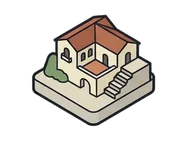
Named for a Scottish clan's seat. William Wallace MacFarland named his 1840s estate for Arrochar, Scotland — home of the ancient chiefs of Clan MacFarlane.
Visit Arrochar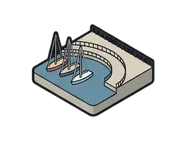
A Guns N' Roses guitarist grew up here. Ron Thal — Bumblefoot — lived in Bay Terrace from childhood through his mid-20s.
Visit Bay Terrace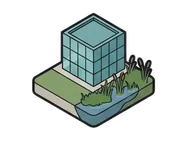
Forty men died here in 1973. A natural gas tank exploded during cleaning — the concrete cap rose 20 feet and crashed back down. One of the deadliest industrial disasters in New York City history.
Visit Bloomfield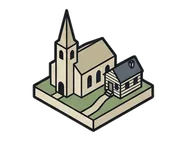
The hill is the neighborhood. "Heights" means the steep rise from Tompkinsville — Victory Boulevard climbs it, and St. George sits at its foot.
Visit Brighton Heights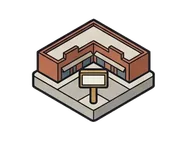
Named for a bar sign. An 18th-century tavern at Victory Boulevard and Richmond Avenue hung a bull's head. The neighborhood kept the name after the tavern burned in 1871.
Visit Bulls Head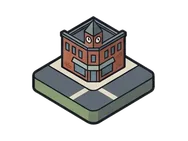
Staten Island's mail goes through here. The 1872 post office that renamed Centerville is now the island's main post office — ZIP 10314.
Visit Castleton Corners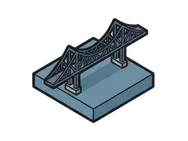
Renamed to hide its German name. Kreischerville became Charleston during WWI — anti-German sentiment erased Balthasar Kreischer's name, though one of his 1854 brick mansions still stands as a landmark.
Visit Charleston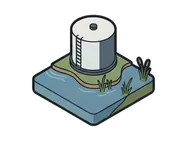
It was called Peanutville. During the Revolution, peanuts were stockpiled here for ferry passengers bound for New Brunswick.
Visit Chelsea
Little Liberia. Targee Street once held the largest Liberian population of any city outside Africa — 6,000 to 8,000 people fleeing civil war. The Liberian Truth and Reconciliation Commission came here to collect testimony.
Visit Clifton
Named for a battle. Dutch Farms became Concord in 1845 — named for Concord, Massachusetts. A Revolutionary War branding move.
Visit Concord
A ferry boat was named for the neighborhood. The Staten Island Ferry boat Dongan Hills, photographed approaching a landing in 1945.
Visit Dongan Hills
The island's first county seat. Under its original name, Stony Brook — before the courthouse moved on.
Visit Egbertville
Three names and a buried train platform. Jacksonville, then Lowville, then Elm Park — and the old railway platform still sits beneath Morningstar Road, from the North Shore Branch that ran until 1953.
Visit Elm Park
Delicatessen Hansen. Fish Hansen. Two-family Hansen. So many unrelated Norwegian families shared surnames that locals told them apart by trade nicknames.
Visit Eltingville
The Godfather's house is here. Two mock Tudor homes at the end of Longfellow Avenue played Casa Corleone in 1971.
Visit Emerson Hill
The longest-garrisoned fort in America. A blockhouse stood here in 1655; it's been garrisoned ever since — through the Dutch, the British, and every American war until 1994.
Visit Fort Wadsworth
From 29,000 tons a day to 320 species in 24 hours. The world's largest landfill is becoming 2,200 acres of park — nearly three Central Parks — designed by the team behind the High Line.
Visit Freshkills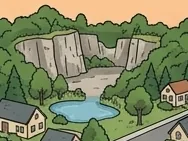
There's no granite in Graniteville. The 1841–1896 quarries that named it held no granite at all — a geologist proved the rock is sodium feldspar. The name is a misnomer.
Visit Graniteville
Named for Grant during the draft riots. Frenchtown was renamed for Ulysses S. Grant as the Civil War began — while the island itself erupted in anti-draft riots in July 1863.
Visit Grant City
The Dogs Playing Poker guy lived here. Cassius Marcellus Coolidge spent his final years in Grasmere.
Visit Grasmere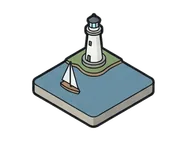
Named by the Dutch. Launched by rockets. La Grand Kills, 1664 — then a pioneering rocket launch in 1933 that made it a Historic Aerospace Site.
Visit Great Kills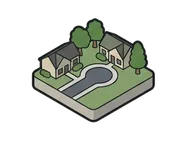
The highway that never came. Al Deppe's — a 1921 amusement palace — was condemned in the late 1960s for a Richmond Parkway that environmental opposition killed.
Visit Greenridge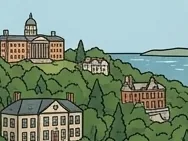
The Godfather ate here. Brewery caves dug into the hillside became part of a restaurant that catered the film's Staten Island shoot.
Visit Grymes Hill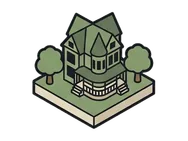
America's first suburb. Laid out in 1851–52 as one of the first self-contained, limited-access suburban subdivisions in the United States — deliberately cut off from the street grid until 1886.
Visit Hamilton Park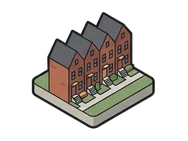
The center of the island. A late-'60s to early-'80s development at Staten Island's geographic center — now the island's second-largest commercial hub after St. George.
Visit Heartland Village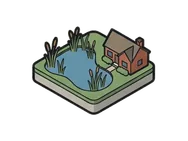
A park that never existed. The 1860 train station was named "Huguenot Park" — there was no park. The "Park" was dropped in 1971.
Visit Huguenot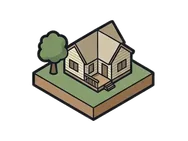
The neighborhood with no name. There is no Jefferson, Staten Island — just the area around the Jefferson Avenue station, the only SIR stop named for a street instead of a neighborhood.
Visit Jefferson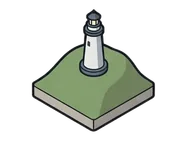
The only Frank Lloyd Wright house in New York City. The Crimson Beech, landmarked 1990 — on a hill renamed for a 141-foot lighthouse whose beam reached 21 miles.
Visit Lighthouse Hill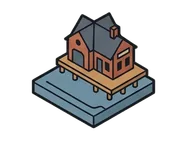
The Underground Railroad ran through here. Several 19th-century homes on Davis and Pelton Avenues were stops — the hiding places are still in them. Robert Gould Shaw lived here too.
Visit Livingston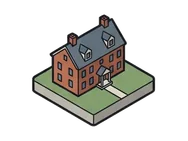
The name is the description. "Manor" for Manor Road, "Heights" for the sudden rise — that's the whole etymology.
Visit Manor Heights
The library is shaped like an oyster. Opened in 2013, the Mariners Harbor branch honors the 19th-century oyster harvesters the neighborhood is named for — and won the city's design award.
Visit Mariners Harbor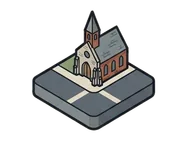
Four roads, one name. Watchogue Road, Jewett Avenue, Victory Boulevard, and Bradley Avenue meet here — named for 18th-century Dutchman Joachim Meier.
Visit Meiers Corners
A miniature railroad to the end of the pier. The 1890s resort pier ran 1,700 feet into the Atlantic — so long the railway ran a tiny train to carry fishermen to its tip.
Visit Midland Beach
St. George was canonized for cheap land. Erastus Wiman promised to "canonize" developer George Law if he'd sell the waterfront cheap for the railroad-ferry terminal. St. George Terminal opened in 1886.
Visit New Brighton
134 people died in the sky above it. The 1960 mid-air collision over New Dorp was the deadliest commercial aviation disaster in history until 1968.
Visit New Dorp
The island's first address. In 1671 Governor Andros patented 86 acres to Obediah Holmes — the first recorded European settlement in the town of New Dorp. The cottage stood for 200 years.
Visit New Dorp Beach
The chicken farm became the mall. E.J. Korvette opened on a former chicken farm in 1964; the Staten Island Mall followed in 1973 on a little-used airport — and the island's commercial core moved inland.
Visit New Springville
A traffic circle for a polar explorer. Amundsen Circle honors Roald Amundsen — plaque erected in 1933 by the Norwegian singing societies, when Oakwood was heavily Norwegian.
Visit Oakwood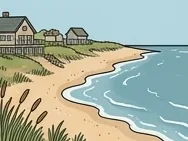
The neighborhood that voted to disappear. After Sandy, 184 of 185 homeowners applied for the state buyout — New York's first urban managed retreat, $200 million to return the land to nature.
Visit Oakwood Beach
The blankest canvas on the island. Industry, big-box, and the Goethals Homes — Old Place has almost no established identity, just wetlands next door and mixed-use plans on the drawing board.
Visit Old Place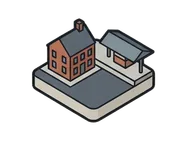
The oldest address on the island. Oude Dorp, 1661 — the first permanent European settlement on Staten Island, founded by Stuyvesant with Dutch, Walloon, and French Huguenot refugees.
Visit Old Town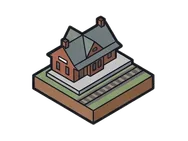
The Godfather was baptized here. The exterior of St. Joachim and St. Anne starred in the 1972 baptism scene — then burned down in 1973.
Visit Pleasant Plains
Named for soap. Procter & Gamble made Ivory Soap here from 1907 to 1991 — then moved the operation to Mexico, and the neighborhood kept the name.
Visit Port Ivory
It had six names. The Burial Place, Bristol, New Bristol, Irvington, Cyrene, Cityville — Port Richmond won out when the village incorporated in 1866.
Visit Port Richmond
It's not Princess Bay. Everyone says it wrong — though a 1776 map shows it really was "Princess Bay." The post office says "Princes Bay Station."
Visit Prince's Bay
Finished before the bridge. Development was mostly done when the Verrazzano opened in 1964 — so Randall Manor skipped the construction boom that remade the rest of the island.
Visit Randall Manor
Invented by a train stop. It was just Tottenville until the Staten Island Railway opened a station called Richmond Valley after the 1860 extension.
Visit Richmond Valley
Cuckolds Town. The original name honored the oyster and clam shells in the Fresh Kills waters. The county seat moved here in 1728 — and left for St. George at century's end.
Visit Richmondtown
The man who invented the telephone (maybe). Antonio Meucci had a credible claim — honored by the U.S. House in 2002 — but was too poor to patent it. Garibaldi, in exile, stayed at his house.
Visit Rosebank
The boat graveyard. The Witte Marine Scrapyard holds dozens of dead steam tugs, ferries, and carfloats rotting in the Arthur Kill muck — including the fireboat that rescued survivors of the 1904 General Slocum disaster.
Visit Rossville
The oldest free Black settlement in America. First land purchase: 1828, months after New York abolished slavery. Oystermen by trade, Underground Railroad by conviction — ten descendant families still live here.
Visit Sandy Ground
A developer's name became a neighborhood's. Cornelius G. Kolff built the 1930s enclave; the label bled outward onto the whole area.
Visit Shore Acres
Thousands lie under the 18th fairway. The golf course sits on a former Marine Hospital quarantine cemetery — researchers found thousands of immigrants, many fleeing the Irish famine, may be buried beneath it.
Visit Silver Lake
The turkeys came from the psych center. Wild turkeys escaped the South Beach Psychiatric Center grounds in the '90s and took the whole island. The neighborhood has stories like that.
Visit South Beach
The battleship that never docked. In 1983 the Navy chose these piers for the USS Iowa. The Soviet Union dissolved first. The site is Urby now — 900 apartments where the Tomahawks were supposed to go.
Visit Stapleton
The breweries built the hill. Grand late-19th-century homes paid for by the waterfront industries — the last brewery closed in 1963.
Visit Stapleton Heights
Not the Queens one. The name comes from an 1889 boarding house — earlier it was Clove Valley. The Vanderbilts built homes here; two still stand.
Visit Sunnyside
The top of New York. 401 feet — the highest natural point in all five boroughs, and the highest ground on the Atlantic coast from Florida to Cape Cod.
Visit Todt Hill
Named for a vice president. Known for burning things down. Daniel D. Tompkins founded it in 1815. In 1858 the residents burned the quarantine hospital to the ground. Both facts are on the record.
Visit Tompkinsville
The end of New York. The southernmost and westernmost point of the city and the state — water on three sides, and the whole island above it.
Visit Tottenville
They had to remove the feral pets first. Undeveloped until the 1990s — before construction, the feral offspring of dumped pets had to be cleared from the land.
Visit Tottenville Beach
Linoleumville. In 1873 the American Linoleum Company built the nation's first linoleum factory on 300 acres — the inventor himself spent two years setting it up. When the plant closed in 1931, residents voted the name away.
Visit Travis
Madonna filmed here. The white-picket-fenced house on Edgar Terrace was the set of "Papa Don't Preach" — with Danny Aiello.
Visit Ward Hill
The name everyone uses isn't the official one. West Brighton is the nickname islanders actually say — the official name is West New Brighton, originally "Factoryville."
Visit West Brighton
America's oldest cricket club still plays here. Established 1872 at Walker Park — the oldest continuously operating cricket club in the United States. The first American lawn tennis court followed in 1873.
Visit West New Brighton
The neighborhood that started with 'no.' Westerleigh was founded in 1877 as Prohibition Park — a temperance campground. Its streets are still named after the people who said no to liquor: Neal Dow, Clinton Fisk, Maine, Ohio.
Visit Westerleigh
From scandal to campus. Willowbrook State School's 1970s abuse scandal forced it closed by 1987 — six years later the grounds became the College of Staten Island.
Visit Willowbrook
The first Methodist church in New York. Opened 1771 — its original congregants came from the island's earliest known families. On the National Register since 1982.
Visit Woodrow